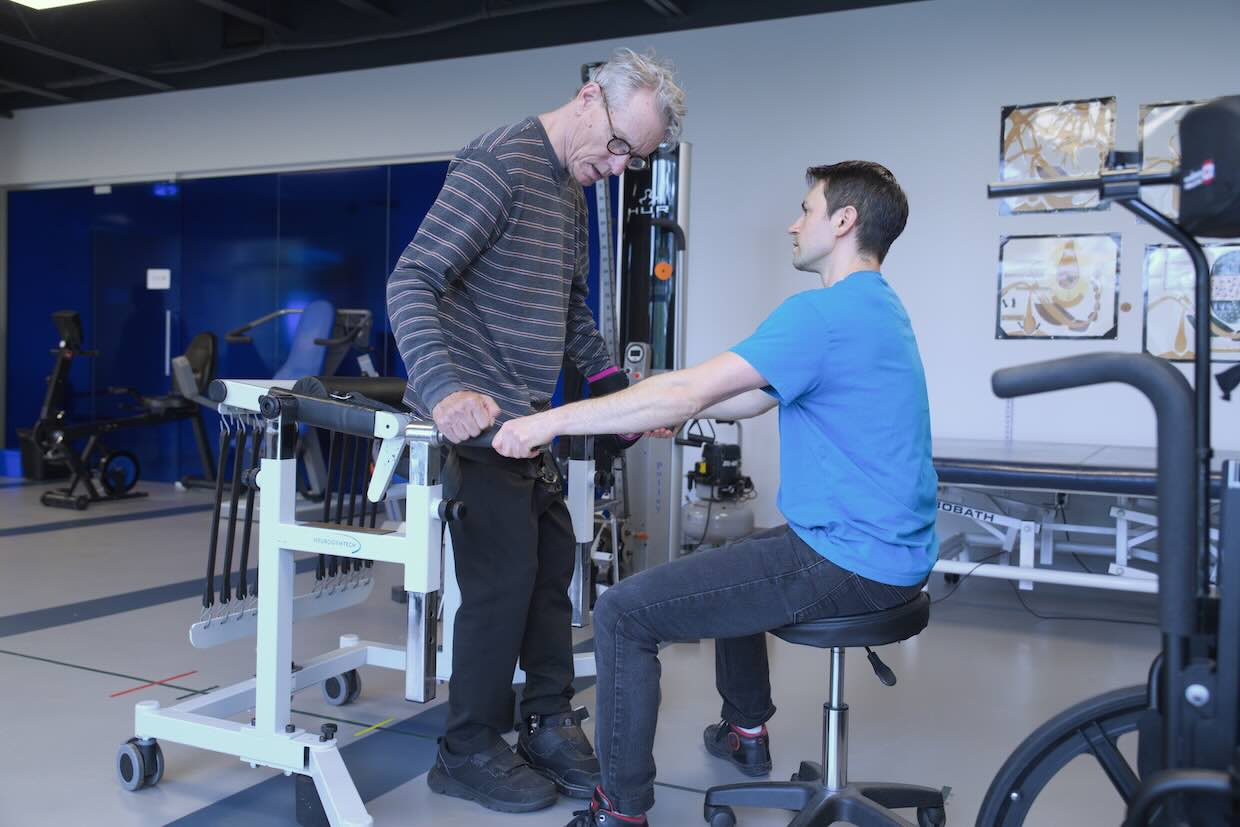
The majority of people affected by multiple sclerosis (MS) eventually have difficulty with walking. This can occur from loss in one or both lower extremity endurance or strength, spasticity which is an abnormal increase in muscle tone, loss in sensory perception or numbness, or cerebellar input resulting in loss of coordination of the lower extremities and loss of balance.
The following sections explain how walking disability is assessed and examine current therapies and emerging research aimed at improving mobility in people with MS.
Treatments for Multiple Sclerosis Affects Walking
Measuring Walking Disability With the EDSS Scale
The Kurtzke disability scale or EDSS (expanded disability symptoms scale) is the gold standard used by neurologists, researchers, and private or government drug plans to grade the level of disability in people affected by MS. The scale is heavily weighed on walking ability. Being able to walk 500m or more means that the EDSS score will be 4 or less. Requiring the use of a cane to walk 100m is graded a 6. Coverage of disease modifying medication is frequently denied once an individual MS patient loses the ability to ambulate even with a walking aid.
Disease-Modifying Treatments for Multiple Sclerosis
Disease modifying treatments such as Ocrevus or Tysabri help prevent or slow down the accumulation of brain lesions which is often manifested as walking difficulty. Once present however these medications do not restore function. Thus, the impetus to use them early in the disease process. Symptomatic therapies can be used to alleviate specific symptoms which affect walking.
Fampyra for MS Walking Speed and Endurance
Fampyra is used to improve walking speed and endurance. Approximately 30% of MS patients obtain a measurable improvement with this medication. Fampyra works by blocking potassium channels and improving synaptic transmission in demyelinated axons. Side effects can include insomnia, anxiety and in rare cases increase in the intensity of neurogenic pain. It is taken twice a day ,12hrs apart as an overdose of Fampyra can lead to seizures.
Medications for MS Spasticity and Muscle Spasms
Baclofen and Zanaflex reduce spasticity or muscle stiffness as well as muscle spasms; intermittent, involuntary, at times painful muscle contractions causing extension of the hips and knees. They often are accompanied by dose dependent somnolence and in the case of Zanaflex can also lower the blood pressure.
Physiotherapy and Walking Aids for MS-Related Ataxia
Ataxia or loss of balance from either sensory or cerebellar deficits are not treatable by any medication. Retraining via the help of specialized physiotherapy can encourage the brain to learn to compensate. Proper use of walking aids such as a cane or walker or specialized shoes may also help to prevent falls.
Experimental rTMS Treatment for MS Walking Difficulties
Experimental treatments such repetitive transcranial magnetic stimulation (rTMS) have shown promising results in improving walking abilities. RTMS is a form of non-invasive neuromodulation (NINM) whereby an electromagnet placed over the scalp produces repetitive, brief, magnetic pulses inducing focal currents in the underlying cortex.
RTMS treatments have shown in animal models to alleviate brain inflammation through reduction in reactive oxygen species, shifting of microglia and astrocytes profile and their cytokine production, improved functional connectivity between different regions of the brain, increase in neurotrophic and neurotransmitter levels and increased neuronal membrane excitability and strengthening synaptic connections. Cochrane reviews have assigned a B level of evidence of rTMS in improving spasticity and neurogenic pain in people with MS.
Participate in Clinique Neuro-Outaouais’ rTMS Clinical Trial for Multiple Sclerosis
At Clinique Neuro-Outaouais we have initiated a prospective, double blind, sham control trial of rTMS in MS looking specifically at improving walking ability in people with MS induced spastic weakness of both lower extremities. Research candidates must be able to walk 25 feet or more with or without a walker or cane. The study will also be looking at secondary endpoints, the impact of rTMS on bladder control and neurogenic pain. We will also corroborate the clinical results with electroencephalographic changes on EEG looking for an electrophysiological biomarker of rTMS in MS.
Recruitment is ongoing. Should you wish to participate or for further information please contact one of the research nurse coordinators, Ibrahim or Victorine at 819-777-2500 or info@neuro-outaouais.ca or visit our website or clinicaltrials.gov and search for the study.